
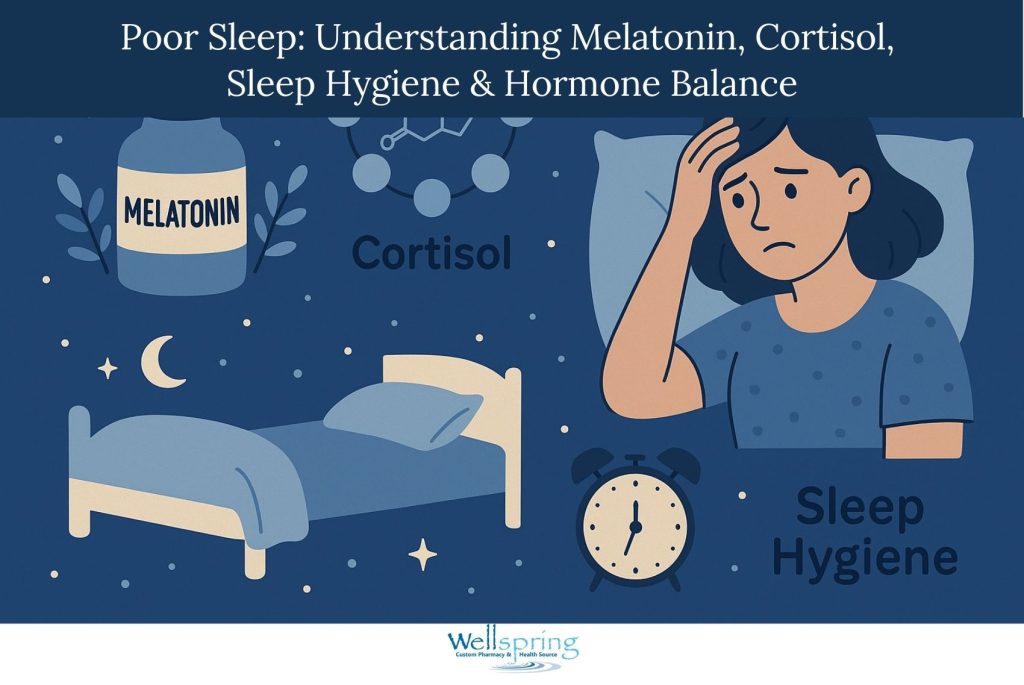
A Comprehensive Wellness Guide by Wellspring Custom Pharmacy
Sleep is one of the most important foundations of whole-body health. Yet millions struggle every night to fall asleep, stay asleep, or wake feeling refreshed. At Wellspring Custom Pharmacy, we believe in addressing sleep concerns through an integrative lens—one that considers hormones, stress, lifestyle habits, and individualized therapies.
Below is a comprehensive guide to the pros and cons of melatonin, the role of cortisol, how to optimize sleep hygiene, and ways to support hormone balance for deeper, more restorative rest.
Melatonin: Pros & Cons
Melatonin is a natural hormone produced by the pineal gland that helps regulate circadian rhythm.
✔ Pros of Melatonin
1. Supports Sleep-Wake Regulation
Melatonin can help cue the body for rest, especially for those with irregular schedules or delayed sleep cycles.
2. Helpful for Jet Lag or Shift Work
It may help reset the internal clock during travel or nontraditional work hours.
3. May Enhance Restorative REM Sleep
Some research suggests melatonin may improve REM sleep, which is important for memory and emotional health.
4. Used Short-Term
With proper dosing, melatonin is generally well tolerated.
✘ Cons of Melatonin
1. Not a Cure for Chronic Insomnia
It’s best for circadian rhythm issues and may not resolve deep-rooted, chronic sleep disorders.
2. Dosing Can Be Tricky
High doses may lead to headaches, vivid dreams, or daytime sleepiness.
3. Potential Medication Interactions
Melatonin may interact with blood thinners, diabetes medications, and immune therapies.
4. Variable Quality in Commercial Supplements
This makes it important to know that it was thoroughly tested and from a trusted company.
Cortisol: The “Awake Hormone” That Affects Sleep
Cortisol should be highest in the morning and lowest at night. When this rhythm becomes disrupted, sleep problems can follow.
When Nighttime Cortisol Is Too High
- Trouble falling asleep
- Waking between 2–4 a.m.
- Feeling “wired but tired”
- Restless mind
Chronic stress is the most common cause of elevated nighttime cortisol.
Strategies to Support Healthy Cortisol Levels
- Adaptogenic herbs like ashwagandha
- Phosphatidylserine in the evening
- Avoiding late-day caffeine
- Gentle nighttime relaxation activities
- Cortisol testing to identify imbalance
Balancing cortisol is often a key part of improving long-term sleep patterns.
Sleep Hygiene: The Foundation of Restorative Sleep
Improving sleep often begins with daily habits and environment.
Evening Routine Tips
- Lower lights 1–2 hours before bed
- Shut off screens at least 60 minutes prior
- Keep your bedroom cool (60–67°F)
- Engage in calming activities—light reading, journaling, stretching
Daily Habits That Promote Better Sleep
- Get morning sunlight to regulate circadian rhythm
- Exercise regularly, ideally before evening
- Limit late-night meals and alcohol
- Keep a consistent sleep and wake schedule
Small, consistent changes can make a meaningful difference.
Hormone Balance & Sleep
Hormones greatly influence sleep quality for both men and women—especially during life transitions like perimenopause, menopause, postpartum changes, and natural aging.
Hormones That Impact Sleep
- Estrogen & Progesterone: Affect body temperature and relaxation
- Testosterone: Supports deeper sleep
- Thyroid Hormones: Regulate metabolic and sleep-wake patterns
- Cortisol: Governs alertness and stress
- Melatonin: Regulates circadian rhythm
Imbalances may lead to:
- Night sweats
- Frequent waking
- Mood swings
- Insomnia
- Morning fatigue
Custom-compounded hormone therapies can help rebalance these systems in a more tailored, precise way.
Comprehensive Q&A: Common Sleep Questions Answered
Q1: Should melatonin be taken every night?
A: Not necessarily. It works best for circadian disruptions rather than long-term insomnia. For persistent issues, root causes should be evaluated.
Q2: What is the ideal dose of melatonin?
A: Many adults respond well to 0.5–3 mg. Higher doses are usually unnecessary and can cause grogginess.
Q3: Can cortisol imbalance cause sleep issues?
A: Yes—especially if cortisol remains high at night. Testing can help pinpoint whether this is contributing to poor sleep.
Q4: How do hormones affect sleep?
A: Estrogen, progesterone, testosterone, thyroid hormones, and cortisol all play roles in regulating rest. Even slight imbalances can impact sleep quality.
Q5: Are compounded sleep supplements beneficial?
A: Yes. Compounding allows for personalized dosing and carefully selected ingredients tailored to your unique needs.
Q6: How long until sleep improves after lifestyle changes?
A: Sleep hygiene improvements are often noticeable within 1–2 weeks, while hormone optimization may take 4–8 weeks.
Q7: What natural supplements help with sleep?
A: Magnesium glycinate, L-theanine, valerian root, and herbal teas can support relaxation, but guidance from a healthcare professional is recommended.
About Wellspring Custom Pharmacy
Wellspring Custom Pharmacy provides customized medications, hormone therapies, and wellness solutions tailored to each patient’s unique biological needs. Whether you’re addressing sleep issues, hormonal imbalance, or overall wellness, our team is committed to individualized, compassionate care.
📍 Contact Information
Wellspring Custom Pharmacy
📍 1987 W. 4th Street, Suite 200, Ontario, OH 44906
📞 Phone: 419-756-2559
🌐 Book an Appointment Online: wellstore.com/appointments/